- Tumblr Posts
The Lord’s Resurrection in the Last Days In Isaiah and Daniel
By author Eli of Kittim 🎓
According to Isaiah’s biblical account concerning “the last days” (Isa. 2:2) of mankind, “the LORD” will resurrect just prior to Judgment Day. Isaiah says the following:
“Men will go into caves of the rocks, and into holes of the ground before the terror of the LORD, and before the splendor of His majesty, when He ARISES to make the earth tremble” (Isa. 2:19, NASV, emphasis added).
This eschatological passage is echoed in Rev. 6:15-17. Interestingly enough, the Septuagint, an early Greek translation of the Hebrew Bible, translates the Hebrew word “קוּם qum” with the word “αναστη,” which is derived from the Greek word ανάστασις (anástasis) and means resurrection:
Eισενεγκαντες εις τα σπηλαια και εις τας σχισμας των πετρων και εις τας τρωγλας της γης απο προσωπου του φοβου κυριου και απο της δοξης της ισχυος αυτου οταν αναστη θραυσαι την γην. ——-Isaiah 2:19, Septuagint LXX
New American Standard Translation:
“Men will go into caves of the rocks, and into holes of the ground before the terror of the LORD, and before the splendor of His majesty, when He arises [or resurrects: ‘αναστη’] to make the earth tremble.”
Scholars render the Hebrew word “קוּם qum” as resurrection. The word in Hebrew, qum (קוּם i.e., cumi in Mark 5:41), and in Greek (LXX) — anastas — means “resurrection.” The word anastas is derived from the term ἀνίστημι and is the root word of ἀνάστασις: https://biblehub.com/greek/386.htm
Similarly, in the New Testament we find the same Greek word, meaning resurrection, attached to an end-time prophecy:
“THERE SHALL COME THE ROOT OF JESSE, AND HE WHO ARISES [‘anistamenos,’ means resurrects in Greek] TO RULE OVER THE GENTILES, IN HIM SHALL THE GENTILES HOPE.” ——-Rom. 15:12
So what is the purpose of this brief study? We’re trying to show that according to Isaiah’s depiction, “the LORD … arises to make the earth tremble” (Isa. 2:19) “in the last days” (בְּאַחֲרִ֣ית bə·’a·ḥă·rîṯ הַיָּמִ֗ים hay·yā·mîm Isa. 2:2), just prior to Judgment. A resurrection that had occurred two millennia ago would in fact contradict what we just read. Yet the New Testament itself doesn’t contradict this at all, but rather confirms it:
“Once in the end of the world hath he [Jesus] appeared to put away sin by the sacrifice of himself. … After this the judgment” (Heb. 9:26-27 KJV).
So, as you can see, the Church’s teaching contradicts both the Old and New Testaments by telling us that this event already happened.
In Chapter 12 and verse 1, Daniel prophesies the death and resurrection of a great prince named Michael—meaning מִֽיכָאֵ֜ל “who is like God”—at the end of days. He writes:
"At that time Michael shall stand up, The great prince who stands watch over the sons of your people; And there shall be a time of trouble, Such as never was since there was a nation, Even to that time. And at that time your people shall be delivered, Every one who is found written in the book. And many of those who sleep in the dust of the earth shall awake, Some to everlasting life, Some to shame and everlasting contempt” (Dan. 12:1-2, NKJV).
The Septuagint, an early Greek translation of the Hebrew Bible, translates the Hebrew word “עָמַד amad” (“stand up”/arise) with the Greek word παρελευσεται, meaning to pass away:
ἡ γῆ παρελεύσεται NAS: and earth will pass away, KJV: and earth shall pass away, INT: the earth will pass away (Mt 24:35 Strong’s Concordance) https://biblehub.com/greek/pareleusetai_3928.htm
The Theodotion Daniel 12:1 of the Septuagint translates the Hebrew word עָמַד (amad) as αναστήσεται, which is derived from the root word ανίστημι and means “shall arise.” The word ἀναστήσεται is the root word of ἀνάστασις and means to “raise up” or to “raise from the dead.” Accordingly, notice how the term ἀναστήσεται in its singular and plural form conveys the meaning of resurrection. In the Theodotion Dan. 12:1, we have the singular form ἀναστήσεται (“shall arise"). Similarly, ἀναστήσονται (the plural form in the Old Greek Dan. 12:2) represents an explicit reference to the general resurrection from the dead, thereby establishing its meaning. And since both of these resurrection events (namely, Michael's resurrection followed by the general resurrection of the dead) are set for "the time of the end" (Dan. 12:4), the implication is that they are eschatological in nature!
So Daniel is telling us that at the time of the end, when there will be great turmoil and distress upon the earth, Michael, the great prince—after passing away (παρελεύσεται)—will arise from the dead (αναστήσεται) in order to energize the general resurrection of the dead (ἀναστήσονται)! What does all this mean? Daniel 12:1-2 reaffirms the last-days-resurrection theme found in Isaiah 2:19 and Hebrews 9:26-28. Therefore, Christ’s resurrection could not have happened two thousand years ago, as most people believe:
“[These] men … have gone astray from the truth saying that the resurrection has already taken place” (2 Tim. 2:18; cf. 1 Cor. 15:53-55).

First Peter 1.10-11 Suggests An Eschatological Soteriology
By Author Eli Kittim
"Concerning this salvation, the prophets, who spoke of the grace that was to come to you, searched intently and with the greatest care, trying to find out the time and circumstances to which the Spirit of Christ in them was pointing when he predicted the sufferings of the Messiah and the glories that would follow" (1 Peter 1.10-11 NIV).
BIBLE EXEGESIS
First, notice that the prophets (Gk. προφῆται) in the aforementioned passage are said to have the Spirit of Christ (Gk. Πνεῦμα Χριστοῦ) within them, thereby making it abundantly clear that they are prophets of the New Testament (NT), since there's no reference to the Spirit of Christ in the Old Testament (OT). That they were NT prophets is subsequently attested by verse 12 with its reference to the gospel:
"It was revealed to them that they were not serving themselves but you, when they spoke of the things that have now been told you by those who have preached the gospel to you by the Holy Spirit sent from heaven."
Second, the notion that 1 Peter 1.10-11 is referring to NT as opposed to OT prophets is further established by way of the doctrine of salvation (Gk. σωτηρίας), which is said to come through the means of grace! This explicit type of Soteriology (namely, through grace; Gk. χάριτος) cannot be found anywhere in the OT.
Third, and most importantly, observe that "the sufferings of the Messiah and the glories that would follow" were actually "PREDICTED" (Gk. προμαρτυρόμενον; i.e., testified beforehand) by "the Spirit of Christ" (Gk. Πνεῦμα Χριστοῦ; presumably a reference to the Holy Spirit) and communicated to the NT prophets so that they might record them for posterity's sake (cf. v. 12). Therefore, the passion of Christ was seemingly written in advance——or prophesied, if you will——according to this NT passage!
Here's Further Evidence that the Gospel of Christ is Promised Beforehand in the New Testament
In the undermentioned passage, notice that it was "the gospel concerning his Son" "which he [God] promised beforehand through his prophets in the holy scriptures." This passage further demonstrates that these are NT prophets, since there's no reference to "the gospel (Gk. εὐαγγέλιον) of God . . . concerning his Son" in the OT:
"Paul, a servant of Jesus Christ, called to be an apostle, set apart for the gospel of God, which he promised beforehand through his prophets in the holy scriptures, the gospel concerning his Son" (Romans 1.1-3 NRSV).
Also, Paul’s letters are referred to as “Scripture” in 2 Pet. 3.16, while Luke’s gospel is referred to as “Scripture” in 1 Tim. 5.18!


The Evolution of a Gentile Messiah in the Bible
By Biblical Researcher Eli Kittim 🎓
——-
Jesus rejects the notion that he’s a descendant of David, and of the Jews, in Matthew 22:41-46.
——-
That’s precisely why the gospel writers are especially careful to dissociate him from the southern kingdom of Judah and from the Jews by locating his place of origin in the north, in the land of the Gentiles, a place outside of, and external to, the Jewish Kingdom. Btw, strictly speaking, the word “Jew “ means a person from the kingdom of Judah (Ιουδαίος).
——-
The Figurative Text (Excerpted from Kittim’s book, The Little Book of Revelation, Chapter 5):
In contrast to the “New Perspective on Paul,” which tries to Hebraize the Greek New Testament by giving Paul a Hebrew flavor, Paul himself is adamant that “Jewishness” in the Bible has nothing to do with race or descendancy. Paul gives us an exact definition of what it means to be a “Jew” within the NT context:
“For a person is not a Jew who is one outwardly, nor is true circumcision something external and physical. Rather, a person is a Jew who is one inwardly, and real circumcision is a matter of the heart—it is spiritual and not literal. Such a person receives praise not from others but from God” (Rom. 2.28-29).
According to Paul’s stunning definition, the biblical term “Jew” does not denote a race or an apparent physical birthright (as the “New Perspective on Paul” would have us believe), but rather an inner essence or, more precisely, an indwelling spirit pertaining to God. This descriptive terminology certainly illustrates a radical new way of approaching, reading, and interpreting the Bible. William Barclay, a world-renowned New Testament scholar, rightly emphasizes that Paul’s message must have infuriated the Jews:
“To a Jew a passage like this must have come as a shattering experience. He was certain that God regarded him with special favour, simply and solely because of his national descent from Abraham and because he bore the badge of circumcision in his flesh. But Paul introduces an idea to which he will return again and again. JEWISHNESS, he insists, IS NOT A MATTER OF RACE AT ALL; IT HAS NOTHING TO DO WITH CIRCUMCISION. It is a matter of conduct. If that is so, many a so-called Jew who is a pure descendant of Abraham and who bears the mark of circumcision in his body, is no Jew at all; and equally many a GENTILE who never heard of Abraham and who would never dream of being circumcised, IS A JEW IN THE REAL SENSE OF THE TERM. To a Jew this would sound the wildest heresy and leave him angry and aghast.”
(The Letter to the Romans. The Daily Study Bible Series. Rev. ed. [Philadelphia: Westminster, 1975], p. 47, emphasis added).
——-
It’s not at all coincidental that in the plot of the gospels Jesus becomes the figurative “son of Joseph,” who is himself reminiscent of the great hero that once lived and reigned in Egypt (the land of the Gentiles)!
——-
Another Biblical clue concerning a Gentile Messiah (besides Moses the “Egyptian”) is the unique reference to Cyrus, who is explicitly called in the Book of Isaiah God’s “anointed” (i.e. messiah; Isa. 45.1). Cyrus is not a Jew! That’s precisely why God says in Isaiah 46.11 that he will bring from a far country the Messiah who will execute his counsel (cf. Matt. 28.18; 1 Cor. 15.24-25). Not only is the Messiah not Jewish, but the elect themselves are not defined as biological Jews. As Romans 9.8 reminds us, “it is not the children by physical descent who are God’s children, but it is the children of the promise who are regarded as Abraham’s offspring.”
——-
And why do you suppose Jesus is compared “to the order of Melchizedek” (Heb. 6.20)? What’s the point of the mimesis? Precisely because Melchizedek “does not belong to their [Jewish] ancestry” (Heb. 7.6), and when compared to Jesus, it follows that Jesus himself “does not belong to their ancestry” either! What is the New Testament trying to tell us? Just like Melchizedek, Christ is not a Jew!
——-
That’s why the gospels keep telling us over and over again that the Jews expect a Jewish messiah to arrive from the line of David but are terribly disappointed in seeing a Gentile messiah appearing from Galilee. And, as a consequence, they want to kill him! And, in the end, they do!
——-
Division of People over Jesus in John's Gospel Because He Does Not Come from Bethlehem of the Jews but from Galilee of the Gentiles:
“Others were saying, “Surely the Christ is not going to come from Galilee, is He? Has not the Scripture said that the Christ comes from the descendants of David [Jews], and from Bethlehem, the village where David was?” So a division occurred in the crowd because of Him” (John 7.41-43).
——-
Jesus Christ (Gk. Ἰησοῦς Χριστός; 1 Cor. 3.11) Defies Jewish Messianic Expectations
John 7.52:
“Search, and see that no prophet arises out of Galilee” (cf. Mt. 4.15-16).
——-
Furthermore, it’s the Greek New Testament that introduces Jesus the Messiah, NOT the Hebrew Bible!
——-
And the Greek-New-Testament was not written by Jews but by Greeks! The New Testament was typically written in articulate, refined Greek, not in Hebrew! And it seems that they weren’t fluent In Hebrew because when these NT authors quote from the OT, they predominantly quote from the Septuagint, an early Greek translation of the Hebrew Bible, and not from the original Hebrew scriptures per se. This indicates that the NT authors were not familiar with the Hebrew language. In other words, they were NOT Jews. And most of the NT letters are addressed to Greek communities rather than Jewish ones. This Greek-element——running not only through the “thematic structure” but also via the writing, composition, production, place-of-authorship (which is said to be outside of Palestine), distribution, and dissemination of the text (largely to Gentile communities)——speaks volumes about the NT’s theological purpose, authorial intention, and cultural milieu!
——-
Conclusion
Unfortunately, we have failed to notice that the narrative of a •Gentile-messiah• is a major theme that runs across the entire Bible! And, in my opinion, the gospels certainly take advantage of this literary motif by showing through various rhetorical devices that Christ is not a Jew!
——-

Preterism Debunked
By Eli Kittim
Was 70 CE the Worst Period Ever in the History of the Earth?
In talking about the great ordeal (aka “the great tribulation”), Mt. 24.21 says that there will be the greatest suffering ever in the history of the world before Jesus comes. 70 CE was not, by any stretch of the imagination, the worst period ever in the history of the earth. We have ample evidence of the Black Death (1346-1353), the Flu Pandemic (1918), and the two World Wars that killed over 100 million people, which were far worse than the destruction of Jerusalem in 70 CE. This fact alone severely weakens the Preterist argument of the imminent eschatology of Jesus and the apostles, which is characterised by the notion that the eschaton was supposed to take place in first century Palestine!
Similarly, Dan. 12.1, after discussing the worst period in the history of the earth, goes on to say that the resurrection of the dead will occur during the same time period (Dan. 12.2). Then, the Book of Daniel goes on to talk about “the time of the end” (12.4, 9), which obviously goes far beyond the first century. In point of fact, the Book of Daniel and the Gospel of Matthew offer two conspicuous examples which demonstrate that “the end of the days” (Dan. 12.13), or “the end” of human history (Mt. 24.14), is radically different than what the Preterist interpreters make it out to be, namely, a first century fulfillment. If anything, Scripture’s future end-time prophecies are meant to signal the ultimate dissolution of the universe (2 Pet. 3.10) and the creation of “a new heaven and a new earth” (Rev. 21.1). Events that obviously haven’t happened yet!
Could the Latter Years or The Day of the Lord Refer to the Time of Antiquity?
Biblically, the “eschaton” is set in the context of a future time-period that is intimately connected with “the day of the Lord” (ημέρα κυρίου)! And as regards the idiomatic expression, the Day of the Lord, almost all Bible scholars believe that it is an event that will take place at the end of the world (cf. Isa. 2.12; Ezek. 30.3; Joel 2.31-32; Amos 5.18-20; Zeph. 1.14-18; Acts 2.20). This, too, debunks the notion that the Day of the Lord was anticipated in the first century CE. Two Thessalonians 2.1-4 warns against such Preterist hypotheses by stating that the Day of Christ has not yet come, and that it won’t come until the arrival of the Antichrist at the end of days.
In fact, Preterism’s interpretative weakness can be exposed through many angles. For example, the end-times war known as the Gog-Magog war in Exekiel 38, which most prophecy experts ascribe to the future, is said to commence “in the latter years” (v. 8)! 70 CE certainly does not qualify as the latter years. It is untenable to suggest this hypothesis which does not fit with any of the end-time biblical prophecies and predictions.
Is the Terminal Generation the one that Will Not Pass Away Until All these Things Take Place?
Modern Greek linguistics demonstrate that “temporal values (past, present, future) are not established in Greek by use of the verbal aspects (or tense-forms) alone” (Stanley E. Porter, Idioms of the Greek New Testament [2nd edn; Sheffield: Sheffield Academic, 1999], p. 25). In other words, just because a verb is in the present tense doesn’t mean that the action is happening at present! So, this point demonstrates that the insistence on the present generation-interpretation does not necessarily square well with the authorial intent. For ex, the Johannine Jesus says figuratively that the hour “is now here, when the dead will hear the voice of the Son of God” (Jn. 5.25), and will come out of their graves. But we have no evidence that the resurrection of the dead happened in Antiquity. In fact, we have evidence that, according to Dan. 12.2, the resurrection of the dead is a future end-time event. Same with Mt. 24.34: “This generation will not pass away until all these things have taken place.” What things? Answer: all the future end-time events that are described in Mt. 24. Thus, Jesus is clearly describing the last generation on earth. For instance, the notion that some of Jesus’ followers would not die before they saw him coming in glory (16.27) or in his kingdom (Mt. 16.28) cannot be attributed to a supposed first-century CE context. Since Jesus has yet to come in his glory, it can only be ascribed to an eschatological spectrum of events. Since there is no historical record of these events ever taking place, the context of such passages is ultimately based not on preterism but futurism. In other words, the generation that is alive, at that future time, and sees these signs (as described in Mt. 24.33) is the same generation that will not die and witness the coming of the savior (cf. 1 Cor. 10.11)! In short, the timeline of “this generation” that “will not pass away” (Mt. 24.34) must be interpreted within the context of the prerequisite signs that will take place, not simply on linguistic grounds.
Translation and Exegesis of Biblical Greek Validates the Futurist Eschatology of the New Testament
If you add my particular contribution to the mix——where I discuss the explicit future eschatological verses in the Greek New Testament that refer to the end of the world——it turns out to be the final nail in the Preterist coffin! Phrases like τό πλήρωμα του χρόνου (Gal. 4.4; Eph. 1.10) refer to the final consummation when all things, both in the heavens and upon the earth, will conclude in Christ! Furthermore, the phrase επ´ εσχάτου των ημερων (Heb. 1.2) literally means “in the last days” and is an ipso facto reference to the end of the ages (cf. the alternative expression επ´ εσχάτου των χρόνων; 1 Pet. 1.20). These apocalyptic expressions are built on the term έσχατος (eschatos), which means “last in time.” In fact, the word eschatology is derived from the Greek term “eschaton.”
The Timeline of the Great Tribulation and the Resurrection of the Dead Does Not Square Well with the Apostolic Age
Many Biblical exegetes have traditionally misunderstood the inferred time-period associated with the phrase, “the time is near,” and have consequently assumed that both Jesus and the apostles expected the imminent end to happen in their lifetime. In fact, Bertrand Russell (the famous philosopher) wrote an essay indicating that he is not a Christian because, in his view, Jesus and the apostles were wrong about their imminent eschatology. These events never happened. Albert Schweitzer came to the same conclusion. Thereafter, many subsequent scholars followed suit.
(See the following article, which refutes this notion of imminent eschatology based on the koine Greek of the New Testament).

However, good exegesis requires that we evaluate the idiomatic expression “the time is near” (Rev. 1.3; 22.10) within its proper context, and therefore interpret it in light of the revelations that are associated with it. In other words, why is the warning in Rev. 22.10 not applicable to ancient times? Well, there are certain sign-posts that need to be deciphered first. And, in order to understand the particular timeline in question, we need a clear outline of the sequence of eschatological events. For example, the aforementioned apocalyptic locution “the time is near” is not mentioned in a vacuum as if it pertains to all generations, including that of the Apostolic Age, but rather in the context of the specific judgments of the tribulation period (see Rev. chs. 6–16). This specific tribulation period is inextricably connected to the “Beast” of Rev. 13, otherwise known as the “lawless one” (cf. 2 Thess. 2.3–4) or the Antichrist (1 Jn 2.18).
In order to ascertain the overall prophetic message of Revelation, the hermeneutical principle of the canonical context demands that we coalesce the different Biblical texts, as if we’re reading a single Book, rather than employing isolated, out-of-context passages to construct a subjective theology. For proper exegesis, we also need to use “the analogy of scripture,” rather than form opinions based on speculation and conjecture. In other words, we must allow scripture to interpret and define scripture. For instance, 2 Thess. 2.1–7 predicts a sequence of eschatological events in which the “Antichrist” will be revealed at roughly the same time as the “rapture,” the transporting of believers to heaven at the end of days. Incidentally, the rapture is said to occur contemporaneously with the general resurrection of the dead (cf. 1 Thess. 4.15–17). Since the general resurrection of the dead is an event that is associated with the apocalyptic time period known as the great tribulation——aka a period of “great suffering” (θλῖψις μεγάλη; Mt. 24.21; cf. Dan. 8.19; 12.1–2; Rev. 7.14)——2 Thess. 2.1-3 is teaching against the doctrine of imminence by stressing that the rapture and the resurrection cannot take place “unless the rebellion comes first and the lawless one is revealed.” Similarly, Daniel places the timeline of the resurrection in prophetic categories by stating that it will occur at the end of days (12.13)!
Let’s not forget that at the beginning of Matthew 24.3 a question is asked about the chronology of the signs of the times regarding these eschatological events:
“Tell us, when will this be, and what will be
the sign of your coming and of the end of
the age?”
It’s important to note, parenthetically, that the apocalyptic phrase “the end of the age” is actually a reference to the end of the world (see Mt. 13.39–40, 49; 24.3; 28.20). So, whatever eschatology one imposes on the New Testament, it must ultimately line up with the enumerated events discussed therein. By way of illustration, Mt. 24.21 says that the Great Tribulation (Gk. θλῖψις μεγάλη) will begin “when you see the desolating sacrilege standing in the holy place” (Mt. 24.15). This is further discussed in 2 Thess. 2.3–4 (cf. Dan. 9.27). Apparently, this is the same time period when the Great Tribulation will commence. Then, Mt. 24.29–31 goes on to discuss the “gathering” of the Son of Man’s elect (i.e. the rapture) within the time frame of the Great Tribulation (Gk. μετὰ τὴν θλῖψιν τῶν ἡμερῶν ἐκείνων). Therefore, the events of the rapture (1 Thess. 4.16–17) and the resurrection (Rev. 20.4–6) echo Daniel’s 12.1–2 reference regarding the general resurrection of the dead which must occur approximately in the same period of time as the phenomena of the Great Tribulation!
Further Evidence of Futurism from Revelation’s Global Wars & Geological Events
Further evidence that the eschatology of the New Testament is uniformly futurist, and not preterist, comes by way of the prophecy of the last empire on earth (Rev. 17.11), which has yet to come, that will play a major role during the time of the Great Tribulation (cf. Rev. 11.7; 12.3–6, 14; 17.9–13). Not to mention the prophetic references, in the Book of Revelation, to major geological events the scale of which has never before been seen in human history. For example, Rev. 6.14 alludes to how tectonic plates had been shifted to such an extent that “every mountain and island was removed from its place.” Revelation 16.20 adds that “every island fled away, and no mountains were to be found.” Such cataclysmic events have never been recorded before in human history! What is more, the descriptions in Luke 21 and the Book of Revelation pertain to global, not local, events. For example, Lk 21.10-11 talks about “Nation … against nation, and kingdom against kingdom,” and about earthquakes, plagues, and famines “in various places.” Revelation 6.8 tells us that “a fourth of the earth” will be wiped out “with sword, … famine, and plague.” Similarly, Rev. 6.15 mentions “the kings of the earth” and all of mankind seeking shelter “in the rocks of the mountains,” while Rev. 9.18 says that during this period “a third of mankind was killed by … three plagues.” Obviously, these are not local but global events. Incidentally, the phrase “was killed,” in Rev. 9.18, is a translation of the verb ἀπεκτάνθησαν, which is an aorist, indicative, passive, 3rd person plural form from ἀποκτείνω, meaning “to kill.” It is important to note that many verbs expressed in past tense, such as the aorist or the perfect-tense, do not actually tell us the timing of an event. There are, in fact, many perfect-tenses that are used for future prophecies. For example, Revelation 7.4 uses the perfect-tense τῶν ἐσφραγισμένων for those who “were sealed.” But this event obviously hasn’t happened yet. Similarly, Isaiah 53 is filled with past-tenses and yet it is a prophecy that Isaiah is writing about! Thus, a superficial reading of the text can often lead to erroneous interpretations.
Conclusion
Revelation 22.7, 9, 10, 18, and 19 repeats over and over again that this Book represents an exclusively prophetic Biblical text:
“Blessed is the one who keeps the words of
the prophecy of this book.”
This is also mentioned in the introduction (Rev. 1.3). Yet many Biblical expositors of a Preterist persuasion repeatedly violate Revelation’s reminder by interpreting certain events within a historical context, as if these events were expected to occur during the lifetime of the apostles. Not to mention that the Book of Revelation itself was written sometime around 96 CE and thus postdates the destruction of Jerusalem in 70 CE, which is often seen as the target date of the supposed eschaton.
As we have seen, good exegesis of “the time is near” phrase is only possible by way of the overall canonical context. Thus, Preterism involves a “proof-text fallacy” which comprises the idea of stringing together a number of out-of-context passages in order to validate the assumed imminent eschatology of the apostles. In other words, the Preterist conclusion is not compatible with the overall canonical context. This is equivalent to a coherence fallacy, that is to say, the illusion of Biblical coherence. Preterism also misinterprets the original Greek language of the New Testament, which is interested in the “aspect” rather than the “time” of an event.
I have outlined the overall canonical message of the Bible along with its specific prophetic content. So, when we look at all the prophetic predictions and combine them together to get a holistic understanding, we get a bigger picture of what will occur before the end. Therefore, how close we are to these events largely depends on how close we are to these prophetic signposts, temporally speaking. If you want to explore the prophetic markers of Mt. 24 from a historical perspective, see my article, Are We Living in the Last Days?

Therefore, Revelation’s caveat that “the time is near” is most certainly not a reference to first-century Christianity (cf. 1 Cor. 10.11; Mt. 24.3)! In light of this study, that interpretation would be completely false. Rather, it means that if the reader understands all the Biblical predictions and the specific end-time sequence of events as parts of an integrated whole, then he or she can properly infer if the time is near simply by discerning whether or not the major prophetic events of the New Testament have taken place on a global scale. A close reading of the apocalyptic genre of the New Testament reveals that it is not alluding to a first century fulfillment but to an end-time expectation!

Kittim: A Symbol of Greece
By Goodreads Author Eli Kittim
——-
Kittim: The Descendants of Greece
According to Gen. 10.4, one of “the descendants of Javan” (Greece) is Kittim. With regard to the actual location of Kittim (or its variants, Chittim [Hb. כִּתִּ֔ים] Kitti or Kittiyyi), most Bible translations identify this region with the island of Cyprus, which was inhabited by Greeks since ancient times (see Josephus “Antiquities” Bk 1, ch. 6). Therefore, it represents the Greeks (otherwise known as the “Ionians”). Given the close proximity of Cyprus to Palestine, this is not surprising since the Hebrew Bible itself mentions that the Philistines themselves originate from Caphtor (most probably Crete/Minoa; Deut. 2.23; Jer. 47.4), a nearby Greek island in the Aegean Sea. Cyprus was also the destination of Paul’s first missionary journey.
Kittim was originally a city-kingdom in present-day Larnaca, known as Kition (Lat. Citium), which was established in the 13th century b.c.e. by Greek (Achaean) settlers. On this basis, the entire island gradually became known as "Kittim" in Hebrew, and was subsequently mentioned by Josephus and the Hebrew Bible (See the Wikipedia article on Kittim: https://en.m.wikipedia.org/wiki/Kittim).

However, the term “Kittim,” in ancient Hebrew literature, began to be applied to all the Greek islands of the Aegean, and subsequently became an umbrella term for the Greek coastlands (see e.g. the expression "isles of Kittim" Jer. 2.10; Ezek. 27.6). So, the term “Kittim” eventually became synonymous with Greece (i.e. Javan cf. Gen. 10.4)!
——-
The Messiah and the Greek Coastland Prophecies
From a theological standpoint, this region is considered important to both Christian and Jewish Messianism. Isaiah 24.15 (NRSV), for example, equates the glory of Yahweh with “the coastlands of the sea”:
Therefore . . . give glory to the Lord; in the
coastlands of the sea glorify the name of
the Lord.
Notice that Isaiah doesn’t say, “glorify the LORD” in Jerusalem, but rather “glorify the name of the Lord” in what appears to be the Greek coastlands. And then, in chapter 51 verses 4-5, Yahweh declares that “the coastlands wait for me,” seemingly suggesting that these same coastlands are central to the coming of Messiah:
Listen to me, my people, and give heed to
me, my nation; for a teaching will go out
from me, and my justice for a light to the
peoples. I will bring near my deliverance
swiftly, my salvation has gone out and my
arms will rule the peoples; the coastlands
wait for me, and for my arm they hope.
Once again, it isn’t Jerusalem but rather the Greek “coastlands” that seem to be associated with the coming of Messiah, symbolized by the arm of Yahweh that “will rule the peoples” (cf. the “son . . . who is to rule all the nations” Rev. 12.5)! This is a recurring motif. Incidentally, according to religious studies professor Ronald Farmer, “the Hebrew people never became a seafaring people. They were a land-based culture.”
An excerpt from ch. 7 of my Book, “The Little Book of Revelation,” from the section entitled, “Messianic Signs of a Seafaring People from the Greek Coastlands,” will explain how this theme is symbolized in the New Testament:
Time and time again, we encounter
passages which foretell of a coming
Messiah whose “glory” and “praise” is
initially declared “in the coastlands.” These
excerpts reveal why Christ’s disciples are
portrayed in the NT gospels as being
predominantly men of the sea (cf. Ezek.
47.9-10). It seems that the gospel narratives
are seeking to establish a connection
between Jesus and “the Greek coastland
prophecies,” which would explain why most
of his disciples turn out to be fishermen! At
least that is the foregoing conclusion of the
text. As an illustration, notice how Isaiah’s
following oracle announces God’s
incarnation while confirming the latter’s ties
to a certain cluster of islands: ‘Listen to me,
O islands, and pay attention, you peoples
[Gentiles] from afar [not from Israel]. The
LORD called Me [the Messiah] from the
womb; from the body of my mother He
named Me. . . . In the shadow of His hand
He has concealed Me, . . . He has hidden
Me.’
If we look closely at the context of Isaiah 49, it becomes rather obvious that the passage is referring to a messianic figure. For example, the phrase “He made my mouth like a sharp sword” is reminiscent of Rev. 19.15: “out of his mouth is a sharp sword with which to strike down the nations.” God says that he sends his servant “as a light to the nations” (v. 6). This reminds us of Jesus who says, “I am the light of the world” in Jn 8.12 (cf. Acts 13.47). He is also given “as a covenant to the people” (v. 8 cf. Mt. 26.28), and so on. Astoundingly, this entire messianic passage is mysteriously addressed to the Greek coastlands.
Most Biblical scholars associate “the coastlands of the sea” (Esth. 10.1; Isa. 11.11, 24.15; Jer. 25.22) with the Greek islands. For example, “the coastland of Capthor” (Jer. 47.4) is commonly associated with the island of Crete. In like manner, the Greek island of Rhodes (known as “Dodanim” [Gen. 10.4], a variant of “Rodanim” [1 Chron. 1.7], a reference to the largest of the Dodecanese islands) seems to be implicated in the text as being one among the “many coastlands” (Ezek. 27.15) that enjoyed a wide range of commercial trade. And it is virtually certain that the term Kittim represents Cyprus, which perhaps got its name from an abundance of cypress trees. After all, was it not Isaiah who once said, “The cypress [Cyprus] tree . . . shall be to the LORD for a name, [and] for an everlasting sign”? (55.13 NKJ). In fact, the sign of Kittim points to the origin of redemption, when God instructed Noah to build an ark made of cypress wood, or wood from Kittim (Gen. 6.14 cf. Ezek. 27.6):
Make for yourself an ark
of cypress wood. Make
rooms in the ark, and
cover it with pitch inside
and out.
——-
The King of Kittim in the War Scroll
The Old Testament references to Kittim are as important to Christian eschatology as they are to Jewish eschatology. For example, the “ships of Kittim,” in Num. 24.24 and especially in Dan. 11.30, seem to have eschatological value given that Bible prophecy scholars have linked them to forces that oppose the Antichrist, probably during the Gog and Magog War of the end-times. Similarly, the Kittim reference in Isa. 23:1 appears to have eschatological import as the verse contextually suggests a precursor to the fall of Babylon in Rev. 18.
But the famous “War Scroll” (aka 1QM), found among the Dead Sea Scrolls, contains prophecies of the final battle between the forces of light and the forces of darkness. Two opponents will square off at the end of time: Belial (whose forces face “eternal annihilation” (1:5 cf. Column 13, Line 4) versus the king of the Kittim (cf. 2 Cor. 6.15-16). The undermentioned quote distinguishes the identifiable hallmark of the Kittim within the War Scroll, namely, that they are those who oppose the so-called “rule of darkness.” This fact can be evidenced by the following lines included in the 1QM manuscript (Column 15, Lines 2-3):
All those pr[epared] for battle shall set
out and camp opposite the king of the
Kittim and all the forces of Belial that are
assembled with him for a day [of
vengeance] [sic].
Notice that both Belial and those who “camp opposite the king of the Kittim” represent the Kittim’s conspicuous adversaries. Therefore, this brief study demonstrates the chief protagonists in the war of Armageddon: Belial, defying his archaic archrival, the king of the Kittim.
——-
Conclusion
Given that the Greek coastland prophecies make reference to the isles of the Kittim (Num. 24.24), and that the Kittim (the people of Cyprus) are the sons of Greece (Gen. 10.4), there is considerable evidence to substantiate the claim that the king of the Kittim signifies the incarnation of an end-time King-Messiah who will step onto the world stage as the progeny of Greece! In fact, it was from the Greek Coastlands that John the Revelator first proclaimed the coming of Christ in Rev. 1.9:
I, John, your brother . . . was on the island
called Patmos because of the word of God
and the testimony of Jesus.
(see my article “Jesus is a Gentile”: https://eli-kittim.tumblr.com/post/106110545257/jesus-is-a-gentile-the-evidence-from-the-gospels).
——-

Is Paul a Witness to the Historical Jesus?
By Goodreads Author Eli Kittim
——-
Paul: The Visionary Witness
Paul is the earliest New Testament writer. And there is compelling textual evidence for concluding that Paul’s witness to Christ is exclusively based on visionary experiences (see Acts 9.3-5; Rom. 16.25-26; 2 Cor. 12.2-4). Critical scholarship would unequivocally concur that Paul never saw Jesus in the flesh. Yet on the very basis of his own personal revelations, which exclude human sources, Paul’s knowledge of Christ surpassed that of his contemporaries. In Gal. 1.11-12, Paul makes it abundantly clear that he’s not a reliable witness to the historical existence of Jesus. He writes:
For I want you to know, brothers and sisters,
that the gospel that was proclaimed by me
is not of human origin; for I did not receive it
from a human source, nor was I taught it,
but I received it through a revelation of
Jesus Christ.
Along similar lines, the German New Testament scholar and historian, Gerd Lüdemann, from the University of Göttingen, ascribes the belief in Jesus’ resurrection primarily to Paul’s visions. In his book (“The Resurrection of Jesus: History, Experience, Theology,” Translated by John Bowden [London: SCM, 1994], 97, 100), he writes:
At the heart of the Christian religion lies a
vision described in Greek by Paul as
ophehe——‘he was seen.’ And Paul himself,
who claims to have witnessed an
appearance asserted repeatedly ‘I have
seen the Lord.’ So Paul is the main source
of the thesis that a vision is the origin of the
belief in resurrection.
——-
Bart Ehrman Says that Paul Tells Us Nothing About the Historical Jesus
Bart Ehrman, who is the James A. Gray Distinguished Professor of Religious Studies at the University of North Carolina at Chapel Hill, once wrote on his blog:
Paul says almost *NOTHING* about the
events of Jesus’ lifetime. That seems weird
to people, but just read all of his letters.
Paul never mentions Jesus healing anyone,
casting out a demon, doing any other
miracle, arguing with Pharisees or other
leaders, teaching the multitudes, even
speaking a parable, being baptized, being
transfigured, going to Jerusalem, being
arrested, put on trial, found guilty of
blasphemy, appearing before Pontius Pilate
on charges of calling himself the King of the
Jews, being flogged, etc. etc. etc. It’s a
very, very long list of what he doesn’t tell us
about.
Even Kurt Aland——the German Bible scholar who founded the Institute for New Testament Textual Research, and one of the principal editors of the Nestle-Aland-Novum Testamentum Graece——went so far as to question the historicity of Jesus. In his book (“A History of Christianity,” vol. 1 [Philadelphia: Fortress Press, 1985], p. 106), he writes:
the real question arises . . . was there really
a Jesus? Can Jesus really have lived if the
writings of his closest companions are filled
with so little of his reality . . . so little in them
of the reality of the historical Jesus . . . .
When we observe this——assuming that the
writings about which we are speaking really
come from their alleged authors——it
almost then appears as if Jesus were a
mere phantom.
No wonder, then, that in his magnum opus (the Epistle to the Romans) Paul sets about describing the gospel of Christ NOT as a biography or an objective historical account but rather as a *revelation* that has been “promised beforehand” through the agency of the Holy Spirit (1.1-3 NRSV):
Paul, a servant of Jesus Christ, called to be
an apostle, set apart for the gospel of God,
which he promised beforehand through his
prophets in the holy scriptures, the gospel
concerning his Son.
——-
Conclusion
Gerd Lüdemann, professor of History and Literature of Early Christianity, concluded an essay——(“Paul as a Witness to the Historical Jesus” in R. Joseph Hoffman, “Sources of the Jesus tradition: separating history from myth” [Amherst, N.Y.: Prometheus Books, 2010], p. 212)——with the following sentence:
In short, Paul cannot be considered a
reliable witness to either the teachings,
the life, or the historical existence of
Jesus.
Christianity preserved the apocalyptic literary tradition of Judaism and reevaluated it in light of its own messianic revelations. The New Testament refined this type of literature as it became the vehicle of its own prophetic and apocalyptic expressions. Apocalypticism, then, not historiography, is the *literary style* of the New Testament, which is based on a *foreknowledge* of future events that is written in advance! It is therefore thought advisable to consider the collection of New Testament writings as strikingly futurist books (see Lk 17.30; Heb. 1.2; 9.26b; 1 Pet. 1.10-11, 20; 2 Pet. 1.19; 1 Jn 2.28; Rev. 19.10d; 22.7, 10, 18, 19)!
——-

Who Gave Satan the Authority to Become the God of this World?
By Author Eli Kittim
——-
Because God supposedly had given him dominion over the earth, most people assume that Adam surrendered his authority to Satan after his transgression, and therefore allowed the latter to become the god of this world. But in order for this particular *dominion theory* to work, it must impinge on *divinity* itself. However, Adam was a created being. He was not a god and could never be understood as a god in any sense of the word. The fundamental problem with the classical view is twofold. First, a mere mortal, such as Adam, does not have authority over the earth. Second, Adam doesn’t have any *divinity* to give away, much less any “divine” dominion over the earth. A close reading of Gen. 1.26 reveals that the dominion God gave to Adam was limited to the animals and creatures of the earth. In other words, Adam was not “the god of this world” (cf. 2 Cor. 4.4); God was! Adam was simply placed on earth “to till it and keep it” (Gen. 2.15). By contrast, only Christ is said to have “all authority . . . on earth” (Mt. 28.18).
What is more, Adam had not yet eaten from “the tree of life” (Gen. 3.22, 24) at the time of his transgression. So, given that Adam was a created being who was not even immortal, much less a god, how could Satan *become* the “god” of this world by taking this divinity from Adam? It’s a logical impossibility; a logical fallacy, if you will. Adam, by default, is not a divine being and therefore cannot, by definition, surrender godhood to Satan. It is both logically and ontologically impossible!
So the question remains, how then did Satan become the god of this world? Who gave him the title deed to the earth, so to speak? The only person who has full authority over the earth, and who is truly a god, is the only one who can surrender this right to Satan. And this is in fact conceivable both from a logical and an ontological perspective. Thus, by the process of elimination, the only person capable of surrendering his divine authority over the earth is none other than Christ! Without a doubt, this relinquishment would temporarily make Satan the god of this world.
This, of course, would imply that Adam could not have been anyone else but Christ. And it would help explain why “God said, ‘Let us make humankind in our image, according to our likeness’ “ (Gen. 1.26). It would further imply that although the first human was created, nevertheless God breathed his own divine Spirit into him and gave him “the breath of life” (Gen. 2.7). If Christ was Adam, it would also help explain why he would have to die to pay for the sins of the world. This view would also help clarify how the transgression of one man could possibly spread biologically to his posterity, which would otherwise be inexplicable.
I’m by no means espousing the “Adam–God doctrine” of Brigham Young (Mormonism). This is a totally fictitious and bogus account based on UFOs and aliens. I do not accept this LDS *account* at all.
But why does Christ say in Rev. 22.13 (NIV) that he’s “the first and the last”?:
I am the Alpha and the Omega, the First
and the Last, the Beginning and the End.
We know why he is the last. But how exactly is he the first? In fact, Heb. 1.6 calls Christ “the Firstborn” (πρωτότοκον). Let us review some key Biblical points. Whereas Adam was made in the image of God, Christ is said to be “the image of the invisible God” (Col. 1.15). Both Adam and Christ are said to have dominion over the earth. Both are givers of life (1 Cor. 15.45 NIV):
The first man Adam became
a living being; the last Adam, a life-giving
spirit.
Both became men. Both are called “son of God” (Lk 3.38; 1 Jn 5.10). Both were pure and holy. Both were tested by Satan. One suffered in the Garden of Eden, the other in the Garden of Gethsemane. There are far more similarities than differences. And the Biblical passages make much more sense when understood from this point of view than from the classical one. If humankind is made in the image of Christ, who was the first Man, then this special creation would refute the conclusion of evolutionary science that Adam was not a historical person. In fact, the classical perspective makes no sense whatsoever. It’s neither logically nor ontologically feasible, or even possible, that a mere mortal, who was not god, surrendered both his authority and divinity to Satan, who subsequently became the god of this world. That’s a contradiction in terms. It’s like talking about a married bachelor or a squared circle. It can never happen in any possible world!
——-

The Quran Mirrors the Bible: Surah 3.55 Echoes Revelation 12.5
By Author & Bible Researcher Eli Kittim 🎓
——-
Surah 3.55 (Quran)
Lo! Allah said: “O Isa (Jesus)! Verily, I shall
cause thee to die, and shall raise thee up
unto Me … unto the Day of Resurrection.
——-
Revelation 12.4-5 (Bible)
Then the dragon stood before the woman
who was about to bear a child, so that he
might devour her child as soon as it was
born. And she gave birth to a son [Jesus], a
male child, who is to rule all the nations
with a rod of iron. But her child was
snatched away and taken to God and to his
throne.
——-
Commentary
The reference to the “great red dragon, with seven heads and ten horns” (Rev. 12.3) indicates that this event is taking place in the end-times. That’s because the 10 horns are said to “make war on the Lamb, and the Lamb will conquer them” (Rev. 17.12-14) at the end of the age! So, the temporal juxtaposition of the “great red dragon” with the pregnant woman (Rev. 12.2) signifies that the dragon and the pregnant woman are contemporaries. In other words, they exist at the same point in time. The idea that “the dragon stood before the woman who was about to bear a child [Jesus], so that he might devour her child as soon as it was born” (Rev. 12.4) means that the dragon wanted to put the newborn to death. The sequence of events continues as follows (Rev. 12.5):
she gave birth to a son [Jesus], a male
child, who is to rule all the nations with a
rod of iron. But her child was snatched
away and taken to God and to his throne.
Curiously enough, the verse doesn’t deny that the newborn was killed. It only affirms that he was subsequently “snatched away” or raptured unto God. The Greek word ἡρπάσθη comes from ἁρπάζω (harpazó), which is the same word used in 1 Thess. 4.17 for the rapture! But this is also a reference to the resurrection of the dead, which occurs simultaneously with the rapture (see 1 Thess. 4.16-17). Incidentally, in this context, the term τέκνον or child seemingly refers to both a spiritual and a physical birth. Given the development of the passage, coupled with the said activities of the “son” (υἱόν)——i.e. dying, ascending to heaven, and so on——it’s quite obvious that, technically speaking, the child (Jesus) is not an infant. Thus, the biblical jargon suggests the initial physical appearance of Jesus on the world stage, who is spiritually born (or reborn) in God.
Revelation 12 clearly indicates that these are all end-time events. For example, cosmic “war broke out in heaven” (12.7). It’s also the time when Satan will be incarnated as the Antichrist & the kingdom of God “and the authority of his Messiah” will come into full view (Rev. 12.10). Further proof is given by the allusion to the Great Tribulation (Rev. 12.14), which lasts for 42 months or 3 and one half years (cf. Dan. 7.25; 12.7; Rev. 11.2; 13.5). Revelation 12.13-14 informs us that the dragon then persecuted the people of God——represented by the woman, the mother church, as it were——but they were protected for 3 and one half years:
[the dragon] pursued the woman who had
given birth to the male child [Jesus]. But the
woman was given the two wings of the
great eagle, so that she could fly from the
serpent into the wilderness, to her place
where she is nourished for a time, and
times, and half a time.
Conclusion
So what does it mean? Revelation 12 is basically telling us that the child Jesus is born in the end-times and dies soon thereafter. Then, the implication is that he is raised from the dead and “snatched away” into heaven. Since the rapture and the resurrection of the dead occur simultaneously, and since this event takes place in the end-times, it must happen during the so-called “Great day of Resurrection,” when all the dead who ever lived will come back to life (cf. Dan. 12.1-2; 1 Thess. 4.16-17; 1 Cor. 15.22-24)!
Surprisingly, that’s precisely what the Quran implies as well. Surah 3.55 seems to say that Jesus’ death, resurrection, and ascension will take place in the end-times, during the Day of Resurrection:
Lo! Allah said: “O Isa (Jesus)! Verily, I shall cause thee to die, and shall raise thee up unto Me … unto the Day of Resurrection.
Therefore, Surah 3.55 (Quran) seems to echo Revelation 12.5 (Bible).
——-
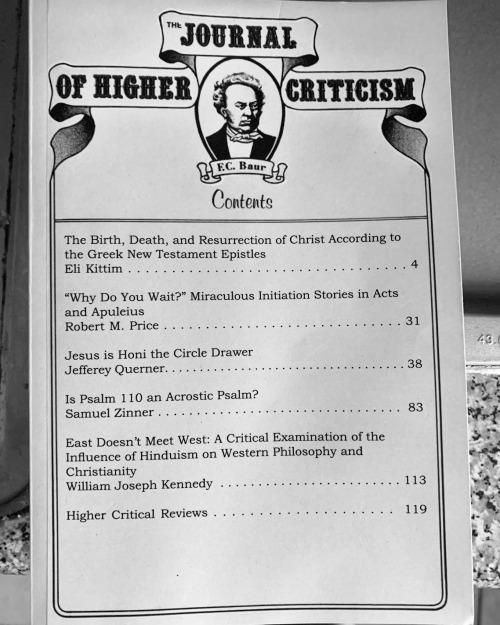
The Birth, Death, and Resurrection of Christ According to the Greek New Testament Epistles
Published in the Journal of Higher Criticism, vol. 13, no. 3 (2018)
By Award-Winning Goodreads Author Eli Kittim 🎓
https://acrobat.adobe.com/link/review?uri=urn:aaid:scds:US:6b2a560b-9940-4690-ad29-caf086dbdcd6

Matthew 24:42